Showing posts with label Jere' M. Fishback. Show all posts

Monday, September 24, 2018

I Love You, Johnny Darling by Jere' M Fishback


Title: I love You, Johnny Darling
Author: Jere' M. Fishback
Publisher: NineStar Press, LLC
Release Date: September 24, 2018
Heat Level: 3 - Some Sex
Pairing: Male/Male
Length: 73500
Genre: Contemporary Historical, college, coming of age, historical, farming, family drama, infidelity

Add to Goodreads

Synopsis

On his first day at state university, freshman Johnny Darling rues his decision to enroll. He’s 150 miles from his family and friends and terribly homesick. But when he’s assigned Ben Stonecipher as a roommate, Johnny’s life brightens. Ben’s a handsome guy from a wealthy family, but he’s emotionally troubled, and for good reason. He’s responsible for his twin brother’s recent death.

A liquor-fueled night in the dorm room leads to personal confessions and intimacy. In the days that follow, an intense affair blossoms between Johnny and Ben, one that must weather the threat of a love triangle neither boy is prepared to deal with.

Excerpt


I Love You, Johnny Darling
Jere’ M. Fishback © 2018
All Rights Reserved

Chapter One
My freshman year of college was about to start, and I felt certain I was screwed.

I lay alone in my fourth-floor dormitory room that resembled a prison cell: cinder-block walls painted taupe, asphalt tile floor, two twin beds, two Formica bureaus, two metal desks with chairs, and two closets. The showers and toilets were down the hall. Outside, a misty rain fell from a sky the color of dishwater. Weak light entered the room through a pair of casement windows framed by plastic drapes. The windows offered a view of a parking lot and a row of dumpsters.

I didn’t know a single soul on campus nor in the city of Gainesville where my school was located.

I could have felt sorry for myself, but what good would it do? I put myself in the situation—I made the choice to come there. Instead of staying at home and attending community college, I enrolled at the University of Florida, and now it was too late to change my mind. My mom had left me there two hours before—that was right after we unloaded my things from her car—and by now, she was probably halfway back to St. Petersburg Beach.

Great.

I’m Johnny Darling, and that’s not a nickname by the way. Darling is my legal name, and you can only imagine the shit I’ve taken ever since I reached seventh grade, and guys started getting cruel about qualities that made someone different in any way.

“Want to suck my dick, Darling? I’ll bet you’d love to.”

“Do you wear panties under your chinos, Darling?”

“Hey, Darling, will you be my homecoming date? I’ll buy you a corsage.”

And so on.

I was always slender, so it wasn’t like I could stop the taunts by slugging some guy who outweighed me by thirty pounds. I’d never even thrown a punch—I wouldn’t have known how to—so all the way through junior high and into early high school, I endured the crap.

I am also queer as a flamingo; I figured that out the first time I viewed a television show called Flipper when I was thirteen. The series starred a bottle-nosed dolphin and a sinewy blond boy named Luke Halpin who frequently appeared shirtless in the show. Mostly he wore only a skimpy pair of cutoff blue jeans. Luke had a washboard stomach, shoulders that bulged like softballs, and a chest that looked like it was carved from marble. The first time I saw him I grew so excited I thought I might bust through the zipper on my shorts. After that, I never missed an episode of Flipper during the three years it aired because—and I’ll freely admit this—I was insanely in love with Luke Halpin. He became my go-to fantasy whenever I lay in my bed at night and touched myself under the sheets.

Oh, Luke…

But I digress.

This was 1969, and the world I dwelled in was not kind to faggots. The only way I could survive was to hide my urges and pretend to be straight. That way, I wouldn’t get my teeth knocked out. My sex life—and this was pathetic—was a tube of jelly and my right hand. In high school, I actually went on dates with girls to the prom and all, but never felt anything sexual when I held a girl’s hand or put my arm around her waist. Even then, I knew marriage to a woman wasn’t going to work for me.

Now, in the dorm room, I lay on the bed closest to the windows and wove my fingers behind my neck. I stared at the plaster ceiling, then at a cobweb waving in one corner. My hang-up clothes were stored in one of the room’s closets, while my folded clothes rested in a bureau. My manual Olivetti typewriter—it weighed twenty pounds—hulked on the desk I’d chosen to use.

Cool air wafted from a ceiling register, so at least the room was climate-controlled. I’d heard some dorms on campus didn’t even have air-conditioning and I figured the rooms in those buildings must have felt like ovens right then, so I had something to be grateful for. I wasn’t sweating and—

Someone rapped on my door, and my body jerked in response. Who could it be?

I turned my gaze to the door and hollered, “Come in.”

When the door swung open, three people stood in the hallway, peering into my room. Two were a middle-aged couple. The third was a slender guy my age. All three carried cardboard boxes.

“Hi,” the younger guy said. “I’m Ben Stonecipher, and I guess we’re roommates. Mind if we come in?”

I swung my feet to the floor and rose. Then I shook Ben’s hand after he put down his boxes. His grip felt firm and warm.

After I introduced myself, he pointed to the couple behind him. “These are my folks, Will and Sarah Stonecipher.”

Will Stonecipher looked like a doctor in a TV series: tall, with salt-and-pepper hair, a trim waist, and an easy smile. He wore dress slacks, a Banlon shirt, and leather slip-ons.

After he set down his boxes, he shook my hand. “Pleased to meet you, Johnny,” he said in a gentle baritone flavored with a Florida drawl. Then he pointed at his son. “Don’t let that guy give you any trouble this year, understand?”

Sarah Stonecipher looked at her husband and pursed her lips while shaking her head. Then she took my hand in hers. “You shouldn’t listen a word my husband says,” she said with a grin on her pretty face. Her prematurely gray hair was cut short like my mom’s, and she wore minimal makeup. Her yellow sleeveless blouse, white capris, and sandals flattered her slim figure.

“I’m sure you and Ben will get along just fine, as long as you don’t mind a little snoring,” she said.

When I glanced at Ben, he rolled his emerald eyes.

Will asked where I was from.

“St. Petersburg Beach,” I said, right after I released Sarah’s hand. “My mom drove me up here this morning.”

Will nodded while he looked around the room. “We’re from Merritt Island, on the opposite coast. Ever been there?”

I shook my head. In fact, I’d never even heard of Merritt Island.

“It’s not a tourist destination like your town,” Will said, “but it’s our home.”

All three Stoneciphers left the room to retrieve more of Ben’s belongings. They returned with clothing on hangers, an electric typewriter, a desk lamp, and a tennis racket in a wooden press, held together with thumbscrews. When they finished hanging the clothes in Ben’s closet, I felt a little embarrassed that Ben’s wardrobe was twice the size of mine. He even owned a navy-blue sports jacket with brass buttons.

Okay, I also owned a sports jacket, but it was a houndstooth number my mom had bought at a church thrift store, and it didn’t look good on me because the sleeves were too short.

Ben also owned a portable stereo record player, a Magnavox model, along with an entire boxful of vinyl LP records. He set up the player on a folding metal TV tray he’d brought. The player resembled a small suitcase. When Ben opened it up, the player displayed two speakers and a turntable.

“Well,” Sarah said to Ben with her hands on her hips, “I think that’s everything from the car. We have a three-hour drive ahead of us, so I guess we’ll be going.”

Ben nodded and his mom hugged him. Ben and his dad shook hands; then Will shook mine too.

“I’m very pleased to have met you, Johnny, and good luck in school.”

“You’ll have to visit us sometime,” Sarah said to me.

I nodded, but then I asked myself how Ben and I would even get to wherever Merritt Island was. Freshman at UF were not allowed to have cars, so we wouldn’t have transportation. We would be, in a sense, captives on campus for the year.

After his parents left, Ben started unpacking boxes. Some contained books; others held things like toiletries, socks, underwear, and T-shirts.

I sat on my bed, watching.

Ben was good-looking by anyone’s standards, an inch or so taller than me, probably six feet, fair-skinned with thick eyebrows, a turned-up nose, and full crimson lips. He parted his dark hair on the side. His voice was deeper than mine, also flavored with a drawl like his dad’s. He wore blue jeans, penny loafers, and a button-up shirt with the shirttail untucked and the sleeves rolled to his elbows.

I rubbed the tip of my nose with a knuckle. “When I picked up my room key, the lady behind the desk said we’ll need to get our sheets and towels from the linen room downstairs. They close at five.”

Ben nodded and glanced at his wristwatch—a gold model with a band made from alligator hide. “I’ll be unpacked in another half hour. Why don’t we go after that?”

“Sounds good,” I said. “Which bed do you want?”

He pointed to the bed I wasn’t sitting on, the one closest to the door. “I’ll take that one if it’s okay with you.”

“It’s fine,” I said while I cracked my knuckles.

After Ben arranged his typewriter and lamp on the desk I hadn’t selected, he fished a framed photo from a box and placed it on his desk as well, a studio portrait of four people: Ben’s parents and two boys who were dressed identical and looked like younger versions of Ben, maybe age sixteen.

“Are you on the meal plan?” Ben asked.

“Yeah, are you?”

Ben nodded while he placed a few books on his desk: a dictionary, a Bible, and what looked like a high school yearbook. “I wonder if the food’s any good. I guess we can eat as much as we want, so I hope it’s decent.”

After Ben finished unpacking, I helped him carry all his empty boxes down a stairwell, where we tossed them into one of the dumpsters we had seen from our room. By now, the rain had stopped, and Ben checked his wristwatch again.

“It’s only two thirty,” he said. “Feel like taking a walk around campus before we get our linens?”

I nodded. “My first class tomorrow morning is in a building called Peabody Hall. I checked a school map; it’s located in the northeast part of campus. Let’s see if we can find it.”

Our dorm was in the southwest corner of campus, and the first buildings we passed were pretty austere, built of red brick with awning-style windows and few architectural features. But everywhere huge trees soared thirty or forty feet: longleaf pines, multi-trunked live oaks festooned with Spanish moss, magnolias, sabal palms, and a Shumard oak with a rutted trunk so wide two grown men couldn’t wrap their arms around it. The sidewalk we trod on snaked through expanses of damp Bahia grass. Azalea and camellia shrubs hugged the flanks of most buildings we encountered.

I asked Ben where Merritt Island was located.

“Do you know the Kennedy Space Center?” he replied.

I nodded. “Some friends and I drove over there to watch the moon-landing launch, back in July. The night before liftoff we slept in my car in Titusville.”

“The space center is actually a part of Merritt Island, at its north end. Our property is close to the middle of the island and a short drive from the Atlantic. My dad’s family has lived there since the Civil War; we own citrus groves and also a beef cattle ranch. It was a great place to grow up.”

I thought of the little two-bedroom cottage my mom had raised me and my sister in, and the fact I had no idea where my father was or even if he was still alive. Clearly, Ben and I had come from very different backgrounds.

My last two years of high school, I’d worked at a gas station. Four nights a week, five hours per night, I pumped gas, checked engine oil levels, fixed flat tires, and performed oil changes. I drove a rusty Ford Fairlane to school, one I bought from a station customer for a hundred bucks. My cuticles, the free edges of my fingernails, and the whorls on the pads of my fingers all stayed perpetually black no matter how much I scrubbed them with Lava soap. My beat-up work boots looked like I’d dunked them in a grease vat, and the coveralls I wore to work were oil and sweat stained.

I could only imagine what Ben would have thought had he seen me back then. And what would he think of me in the days and weeks ahead, when he learned I didn’t have a pedigree like his?

As we approached the northeast section of campus, the buildings looked older and statelier, with mullioned windows and pitched roofs rimmed by battlements. Some were covered in ivy. Peabody Hall was a small building, really, just four stories with a gabled tile roof. Its western flank faced a broad and grassy plaza shaded by longleaf pines.

I glanced at my Timex wristwatch and realized it had taken us fifteen minutes to walk there from the dorm. My first class the next morning was at 8:00, so I’d need to leave the dorm no later than 7:45, maybe 7:40 to be safe. I didn’t want to be late the first day of school, now did I?

“Have you bought your books yet?” Ben asked while he studied the buildings around us.

“Not yet; I guess I will after classes end tomorrow. What about you?”

Ben nodded. “My mom drove me over here last week to buy them from the campus bookstore, and get this: when I checked out at the register, the cashier tried to sell me a beanie.”

“A what?”

“It’s a silly little orange-and-blue cap that male freshmen are expected to wear their first quarter.”

I made a face. “I don’t understand. Why?”

“So upperclassmen can pick on them—it’s a tradition here.”

“Did you buy one?”

Ben shook his head. “It’s not required, so why invite that sort of treatment from guys? I have more respect for myself than that.”

I decided not to buy a beanie either.

Purchase

NineStar Press, LLC | Amazon | Smashwords | Barnes & Noble | Kobo

Meet the Author

Jere’ M. Fishback is a former journalist and trial attorney. He lives on a barrier island on Florida’s Gulf coast, where he enjoys watching sunsets with a glass of wine in his hand and a grin on his face.

Website | Facebook

Giveaway

a Rafflecopter giveaway

  Blog Button 2

Thursday, June 22, 2017

Kevin Corrigan and Me by Jere' M. Fishback


Title:  Kevin Corrigan and Me
Author: Jere' M. Fishback
Publisher:  NineStar Press
Release Date: June 19
Heat Level: 2 - Fade to Black Sex
Pairing: Male/Male
Length: 57400
Genre: Contemporary and Historical, YA Literature, Historical, memoir fiction, non-explicit, Gay, Bi, Cisgender, coming-of-age, friends to lovers, homophobia, in the closet, coming out, athlete

Author Interview


How did you come up with the title?
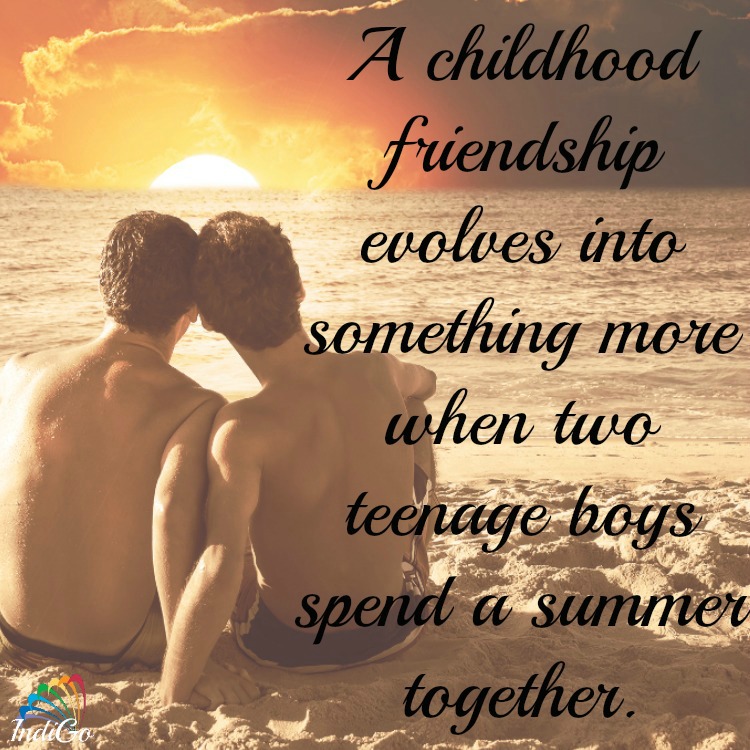
It's pretty obvious. The book is about my friend and me and how our friendship evolved into something far deeper.

Did you learn anything from writing this book?
I learned that it's pretty amazing how detailed my memories of that period in my life. As I wrote the book I realized that my brain had stored all of that information. I remember the houses I lived in, the high school I attended, and the places my friend and I frequented when he lived with me that summer. I also recalled the names of pop songs played on the radio at the time, and the movies of that period. The book contains a lot of that sort of detail about the early-to-mid 1960's.
 

Add to Goodreads


Synopsis

Ever since their boyhood days, fifteen-year-old Jesse has craved something more than friendship from Kevin Corrigan. Athletic, handsome and cocky, Kevin doesn't seem approachable. But when Kevin spends a summer at Jesse's family's beach home, an affair ignites between them, one so intense it engulfs both boys in a emotional tug of war neither wants to give up on.

Excerpt

Kevin Corrigan and Me Jere’ M. Fishback © 2017 All Rights Reserved Kevin Corrigan died two days ago, on a Thursday, at the age of sixty-five. I know this only because I saw his obituary in this morning’s Tampa Bay Times. The obit provided limited information: date of birth, date of death, and Kevin’s place of residence, Madeira Beach. It also said Kevin had no known survivors, but that isn’t really true because I’m still alive and I am very much Kevin’s survivor. My name is Jesse Lockhart. I grew up in the Jungle area of west St. Petersburg, Florida, in a cinder-block home with a fireplace, casement windows, a weed-and-dirt yard, no air-conditioning, and an ineffective furnace. My parents divorced when I was six years old and my father disappeared shortly after that, so he wasn’t a factor in my life. I lived with my mother and younger sister, Lisa. Kevin was an only child who lived next door to me with his Boston Irish parents. He was a year older than me, and between my parents’ divorce and the time I reached the age of eleven, Kevin became my primary masculine influence. I worshipped him. Always half a head taller than me, Kevin was lanky, with curly blond hair and a riot of freckles dancing across his turned-up nose. His blue eyes twinkled, and he was athletic in a way I would never be. He had a cocky attitude; he wasn’t intimidated by anything or anybody, not snarling dogs, rattlesnakes, teenagers, or any type of authority figure: cops, umpires, or the nuns that taught at his Catholic primary school. Okay, he wasn’t the sharpest when it came to his schoolwork. I was mostly a straight-A student while Kevin scraped by with Cs, and every time report cards issued, his mom compared mine to his. Then she’d say to Kevin, “Why can’t you be more like Jesse?” But Kevin wasn’t meant for school and textbooks; he wasn’t designed to perform academic tasks. His world was the palmetto and pine forest near our homes, the baseball diamonds in our part of town, a tree house he built for himself, and the streets and alleys of our suburban neighborhood. It seems hard for me to believe now, but when I was eight and Kevin nine, he and I often rode a city bus, unaccompanied by an adult, from the Jungle all the way to downtown St. Petersburg, a ten-mile journey, just to see a matinee at the Florida Theater. Afterward, we’d visit a magic shop called Sone’s, a quirky place run by a Japanese couple where we bought stupid things to bring home: fake plastic puke, a whoopee cushion, and cigarette loads I snuck into my mom’s Viceroys; they exploded with a bang shortly after she lit up. Once we bought a tin of itching powder, which I think was simply shredded fiberglass, and then on the bus ride home, Kevin surreptitiously sprinkled some of the powder down the backs of two women’s sundresses, causing the women to writhe and scratch while we giggled and jabbed each other in the ribs. Kevin’s home life was a mess. His father, Colonel Frank Corrigan, was a wheelchair-bound WWII veteran who’d sustained spinal damage in the Pacific theater. He was in constant pain, and this caused him to be cranky and out of sorts. He puffed on Hav-A-Tampa cigars jammed into a holder he’d fashioned from a coat hanger because his fingers didn’t work very well. He drove a black Cadillac with the accelerator and brakes operated by calipers attached to the steering wheel. He was always yelling at Kevin for one thing or another in a barking tone I could hear a block away. His favorite epithet was, “I’m gonna kill that kid, Margaret.” Margaret was Kevin’s mother, the Corrigan household martyr who endured Kevin’s mischievous behavior and her husband’s unceasing demands. A bulky woman with auburn hair and a narrow, thin-lipped mouth, she bathed the Colonel, helped him in and out of bed, got him dressed, and cooked the family meals. She washed clothes in an old-fashioned ringer-style washtub, then hung them to dry on a clothesline in the Corrigans’ backyard. She always seemed tired and dispirited to me. I rarely heard her laugh, and I often wondered whether the Colonel and Margaret had once enjoyed a happy marriage, back when the Colonel was healthy and Kevin wasn’t part of their lives. The Corrigans’ social life revolved around the Madeira Beach Moose Lodge, the VFW, and St. Jude Catholic Church. Every Sunday they piled into their Cadillac to attend Mass with the Colonel’s wheelchair loaded into the trunk by his wife. Once I went with them; I was curious to see how a Catholic service might differ from those at my Methodist church. Much to my surprise, the St. Jude Mass was conducted in Latin; I couldn’t understand a word the priest said. Money was collected from parishioners through use of a metal basket attached to a telescoping aluminum pole operated by an usher. The day I was there, Kevin pretended to put money in the basket, but instead he stole a dollar when his folks weren’t watching, then stuffed it into his pocket after giving me a wink. I felt appalled by his behavior, but of course I didn’t snitch; I wouldn’t have dreamt of it. Kevin was a natural athlete; he could play any sport—baseball, basketball, or football—with agility and grace. But he couldn’t get along with other players; he constantly got into scraps with members of opposing teams, or even with his own teammates. He had a way of needling guys with sarcastic remarks about their lack of athletic prowess or even their looks. (“Is that your nose or are you eating a banana?”) In fact, he seemed incapable of forming true friendships with anyone other than me. For reasons I didn’t understand at the time, Kevin was drawn to me just as I was drawn to him. He never teased or threatened or taunted me like he did other boys in the neighborhood. He never called me an insulting nickname. I was by nature a gentle boy who lacked self-confidence in the masculine world, so I never tried emulating Kevin’s miscreant behaviors on my own, but I loved serving as his sidekick and sycophant. I relished my role as abettor. Many of our neighbors had citrus trees in their backyards: oranges, tangerines, and grapefruits. One night, at Kevin’s suggestion, we snuck into the neighbors’ properties to fill two paper grocery sacks full of grapefruits larger than softballs. Across the street from my house, a huge live oak grew in the right-of-way. One of the oak’s limbs stretched across the road like an arm reaching for a box of crackers in the cupboard. Toting our sacks of grapefruits, Kevin and I scaled the tree and perched ourselves on the limb overlooking the road. When a car passed beneath us, Kevin or I dropped a grapefruit on the car’s windshield, which always scared the bejeezus out of the car’s occupants. Women screamed and brakes squealed. Men cursed. But of course no one could see us up there in the darkness. Every Halloween Kevin and I dressed as hobos. We scavenged the neighborhood, collecting candy in our pillowcases while pulling the occasional prank. My favorite was one where Kevin scooped up a pile of dog turds using a Sabal palm boot as a shovel. He dropped the turds on someone’s doorstep, soaked them in lighter fluid, and set them on fire. Then he rang the unsuspecting homeowner’s doorbell. The result, of course, was never in doubt. The surprised resident stomped the fire out with his shoe, only to belatedly discover what sort of material flamed. Kevin and I hid in a nearby bush, watching and chuckling so hard I think I might have peed in my pants. Kevin liked to spy on people at night, on weekends or during summers when we could stay out until nine or ten. We peeped on women undressing, on an old guy who picked his nose and ate the boogers, on a pair of men who slow-danced together in their underwear to Johnny Mathis records, on a high school boy who often pleasured himself while leafing through a girlie magazine. I, of course, had never seen such things before. Kevin’s spying opened up a whole new world for me, one I knew I would never discuss with my mom or sister or anyone else. How could I possibly? I remember one summer when the Colonel traded in his Cadillac for a two-toned, cinnamon-and-cream Rambler station wagon. The Corrigans took a month-long cross-country trip in the Rambler, all the way to California, where Kevin sent me a postcard from Disneyland. He sent me another from the Alamo in San Antonio. Both were places I’d always dreamed of visiting, but figured I’d never see. That was a miserable month for me. I felt jealous of Kevin’s travels and as lonely as I’d ever been in my young life. I think I was nine then. Of course there were other boys in the neighborhood and I did my best to pass the time with them, but it wasn’t the same as being with Kevin. I longed for the day the Corrigans would return. The Corrigans’ house stood north of ours. Kevin’s bedroom was at the southwest corner, while my bedroom was at the northwest corner of our house, so Kevin and I always slept about twenty feet apart. If we’d wanted to, we could have tossed a football back and forth between our bedroom windows. But I never spent the night with Kevin and he never spent the night with me because Kevin was a chronic bed-wetter. His mother kept a fitted rubber sheet on his mattress at all times, and this went on for as long as Kevin lived next door. I didn’t know anything about the reasons behind bed-wetting, but even then I suspected it was caused by emotional distress of one sort or another, probably linked to his poor school grades, his father’s withering tirades, and the Colonel’s very obvious disability that surely must have embarrassed Kevin. But I always kept his bed-wetting problem to myself; I never even mentioned it to my mother or sister. I figured I owed it to Kevin to keep his habit a secret from the rest of the world. When Kevin and I were boys, Catholics were not supposed to eat meat of any sort on Fridays: no beef, chicken, or pork. So every Friday Mrs. Corrigan prepared a dinner featuring Mrs. Paul’s fish sticks. These were tasteless little rectangles of processed and frozen cod you heated up on a cookie sheet, and Kevin detested them. “They taste like cardboard,” he told me, “even when I cover them with tartar sauce.” At our house, my mom prepared a fried chicken dinner every Friday—the tasty meal was a ritual—and every Friday Kevin would sneak over to our house to dine on fried chicken, unbeknownst to his parents. Of course, my mom knew what was up, but she never told Kevin’s parents he violated God’s law every Friday night. She let him gnaw on wings and legs with abandon because Mom was that way. Within reason, she believed in giving kids the freedom to do whatever they chose. The summer before my sixth-grade year, I was nearly eleven and Kevin was already twelve. He was almost as tall as my mom at that point—he’d put some muscle onto his frame as well—and I remember very clearly an incident involving Kevin, a truly cathartic experience for me. I had just finished my breakfast and brushed my teeth, and I walked over to the Corrigans’ house to see what Kevin was up to. Their garage door was open, and I heard someone rattling about inside, so I walked into the garage’s shadowy interior where I found Kevin rummaging through the contents of a cardboard box. He wore nothing but a flimsy pair of briefs that clung to his buttocks and displayed a randy bulge in front. Kevin might as well have been naked. Right away my mouth grew sticky and my knees wobbled. I lived with two females—I had never seen another boy in his underwear—and the sight of Kevin’s lean physique captivated me in a strange way I hadn’t felt before. There in the garage, I thought Kevin was the most beautiful thing I’d ever seen. I felt so stunned I couldn’t speak. I just clenched and unclenched my fingers at my hips while I kept my gaze focused on Kevin. When he finally noticed me standing there, Kevin gazed at me with his eyes narrowed and his forehead crinkled, as if to say, “What are you looking at?” It was then, of course, I realized something about myself that I’d never before suspected: I felt a physical attraction to Kevin; I wanted to touch him in ways that weren’t allowed in the world we dwelt in, and the realization that I harbored these urges frightened me out of my wits. I didn’t know what to do or say, so I turned on my heel and ran back to my house as quickly as I could. I went to my room and closed the door behind me. Then, after I sat on my bed, I rocked back and forth while wagging my knees and cracking my knuckles. My stomach roiled and my heart thumped. Between my legs, I felt a stiffening as I recalled exactly what I’d seen in the Corrigans’ garage. My viewing of an almost nude Kevin had seared his sex appeal into my brain, and I was never quite the same guy after that morning. There in my bedroom, I knew I was somehow different than other boys, and though I couldn’t yet articulate how I was different, I was certainly on my way to finding out. Neither Kevin nor I ever mentioned the incident in the garage after it happened. In fact I suspect Kevin had no idea what it had meant to me or how that moment had altered my view of myself. But I knew.

Purchase

NineStar Press | Amazon | Smashwords | Barnes & Noble | Kobo


Meet the Author

  Jere’ M. Fishback is a former journalist and trial lawyer who now writes fiction full time. He lives with his partner Greg on a barrier island on Florida’s Gulf Coast. When he’s not writing, Jere’ enjoys reading, playing his guitar, jogging, swimming laps, fishing, and watching sunsets from his deck overlooking the Intracoastal Waterway.

Website | Facebook

Tour Schedule

6/19    Bayou Book Junkie   
6/19    MM Good Book Reviews       
6/20    Divine Magazine        
6/22    Dean Frech    
6/23    Love Bytes Reviews    
6/23    Scattered Thoughts and Rogue Words          

Giveaway

a Rafflecopter giveaway Blog Button 2 Save Save Save